
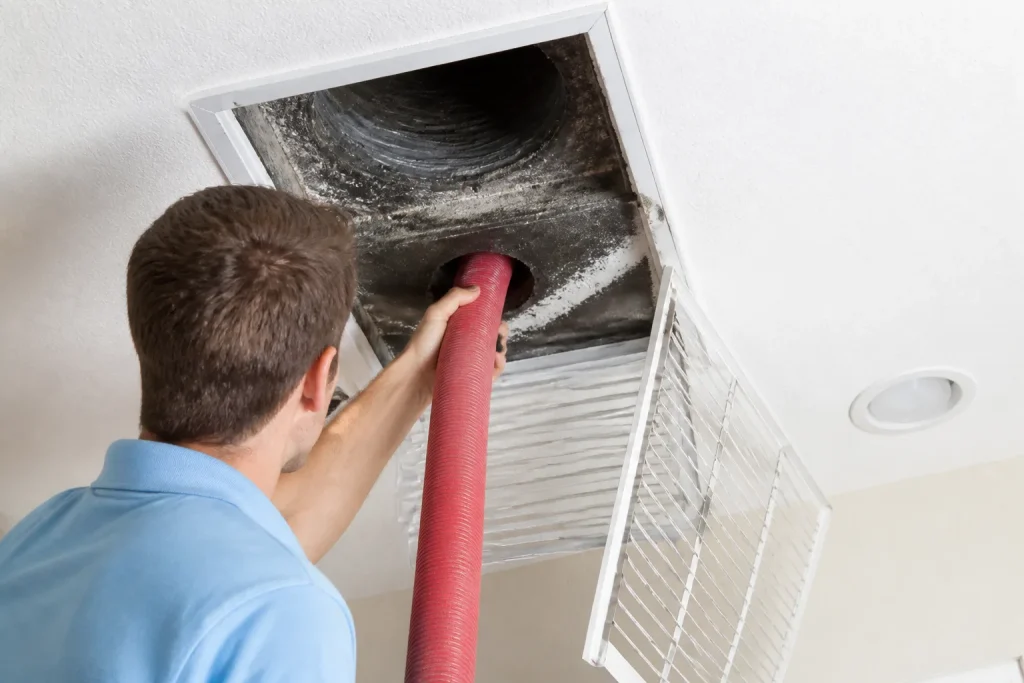
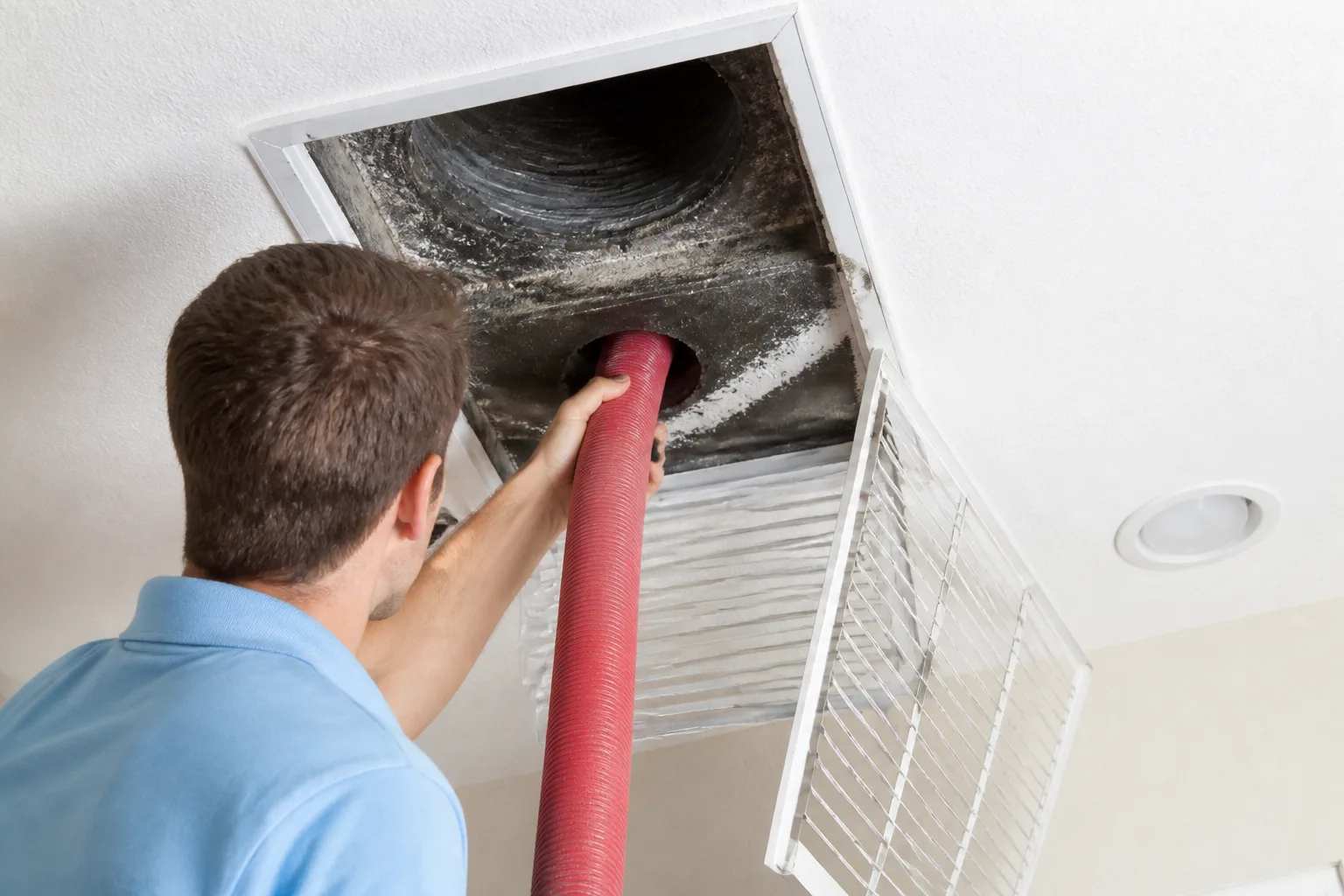
Top Signs You Need Air Duct Cleaning Service – Don’t Ignore These
Dusty registers aren’t the first sign your ducts need cleaning. They’re one of the last. By the time dust is visibly puffing out of a supply vent, contamination has been building inside the system for months, often through a whole heating season. The early signals are quieter: a furnace that runs longer than it used to, a bedroom that never quite catches up to the thermostat, or a filter that seems to clog faster every year. Those are the clues worth paying attention to in Tacoma.
Below we walk through the signs that actually tell you something, in the order a technician would check them. If you’d rather skip the detective work, call (877) 792-6386 for a free estimate.
Key Takeaways
- Performance changes (energy bills, uneven rooms, fast-clogging filters) show up before visible dust does.
- Odor source matters – duct contamination smells different from a dirty coil or drain pan.
- Rodent or insect activity inside the home is a duct inspection trigger, not just a pest problem.
- Recent remodeling is a reliable reason to clean, even if the last service was recent.
- Our technicians have up to 11 years of experience reading these signals in Tacoma homes.
What are the early warning signs your ducts need cleaning?
The earliest reliable signs are performance-based, not visual. A forced-air system that has to work harder to move the same air will show it in three places: your energy bill, your room temperatures, and how often your filter loads up. Visible dust and odor come later, once the buildup has reached the point where it’s shedding into the living space. That order matters, because waiting for the visual stage means months of extra run time and a bigger cleaning job.
Watch for these, roughly in order of how early they appear:
- Energy bills that creep up without a rate change. If your usage climbs while your habits haven’t, restricted airflow through loaded ducts or a fouled blower is a common cause.
- Rooms that won’t hold temperature. A room that needs a vent cracked open or a door left ajar to stay comfortable is often starved of airflow by a partial blockage or a leaking run.
- Filters clogging faster than normal. Every filter has a rhythm. When that rhythm shortens, something upstream is shedding debris into the return.
- Longer run cycles. A system that cycles on more often and runs longer is compensating for restricted flow.
- Visible dust at registers or streaks on supply diffusers. This is the late-stage confirmation, not the early warning.
In our experience, homeowners in Tacoma who track their filter change dates notice this pattern before anything else. It’s the cheapest diagnostic you have.
How do you tell duct contamination from an HVAC component problem?
Smell is the giveaway, but only if you know what each source smells like. Duct contamination usually produces a musty, dusty, “old basement” odor that follows the blower and shows up a minute or two after the system starts. HVAC component odors are often sharper or more localized: a wet-coil smell near the indoor unit, a drain pan that’s gone sour, or a hot, faintly metallic odor from a heat exchanger. In Tacoma’s wet winters, a cool, damp crawlspace or a sweating coil is a common culprit, and it can smell a lot like dirty ductwork
Here’s a practical way to sort it out:
- Musty, dusty, distributed: usually ducts and duct liner.
- Wet-basement or sour smell near the air handler only: typically the coil or drain pan.
- Hot, faint metallic or burnt smell when heat runs: a heat exchanger concern, and worth a professional inspection right away – don’t keep running the system
- Constant smell that doesn’t change with the blower: likely a moisture or ventilation issue in the space, not the ducts.
This distinction is why a proper assessment matters before cleaning. Cleaning ducts around an unrecognized coil or heat exchanger issue won’t fix the smell. Our HVAC cleaning work addresses the equipment side as well as the ductwork, so the source actually gets identified.
Why is pest activity a duct cleaning trigger?
Rodent droppings, gnaw marks, or insect activity inside the home are a direct reason to inspect the duct system, not just call a pest company. Rodents and insects get into ductwork through gaps, disconnected runs, and unsealed penetrations, and once inside they leave droppings, nesting material, and sometimes chewing damage on duct liner. Homeowners often don’t connect the two until the damage is extensive and air quality has already suffered.
Watch for these combinations:
- Droppings in a basement, crawlspace, or utility closet near duct runs
- Scratching or skittering noises in walls or ceilings that follow duct paths
- Chewed insulation or flexible duct material
- Persistent musty or animal odor when the system runs
Cleaning alone isn’t enough in these cases. Where we find separation, rodent damage, or gaps in the duct system, we repair and seal them so the problem doesn’t simply return. That repair capability – finding and fixing the root cause rather than cleaning around it – is where our air duct cleaning work goes further than a straight debris removal job.
Why does recent renovation work mean you should clean your ducts?
Remodeling is one of the most reliable reasons to schedule duct cleaning, regardless of how recently the ducts were serviced. Drywall dust, sawdust, fiberglass particles, and construction debris travel through the return system and settle inside ducts. Even a well-sealed renovation area leaks fine dust into the return pathway. If you’ve had a bathroom, kitchen, or basement refinished in Tacoma, your ducts have likely captured more than a normal year of ordinary household dust in a matter of weeks.
Signs your post-renovation ducts need attention:
- Fine white or gray dust appearing on horizontal surfaces long after cleanup
- Filters loading fast after the project finished
- A drywall or chemical smell when the system runs
- Newly installed flooring or cabinetry nearby a return grille
This is also where professional-grade equipment matters. Consumer vacuums and rental units don’t move enough air volume to pull construction dust out of a residential system without pushing some of it back into the room. We use Rotobrush and Nikro systems – the same platforms commercial contractors rely on – to clean at the level a post-renovation duct system actually needs.
When does a wet Pacific Northwest winter turn into a mold risk?
Duct liner holds moisture in a way bare sheet metal doesn’t. During a Tacoma winter, high outdoor humidity, cooler duct surfaces, and condensation from poorly sealed runs can push liner moisture levels up. Once liner stays damp, mold has what it needs to grow. Mold in ducts shows up as a persistent damp, earthy smell that doesn’t go away after the system runs for a while – and that’s the point where cleaning and sanitizing needs to happen.
Warning signs of a moisture problem inside your ducts:
- Damp, cool, or clammy air from supply registers
- Persistent “wet basement” smell that returns every winter
- Visible dark staining or discoloration inside registers
- Condensation on duct surfaces, especially in crawlspaces and unconditioned runs
This is where our Air Duct Cleaning Tacoma Pros air quality and sanitizing work fits in. Cleaning removes the debris that holds moisture. Sanitizing with Guardsman products then addresses what’s grown on surfaces. Duct repair and sealing close the air leaks that let Tacoma’s damp winter air in to begin with.
If you’d rather not climb into a crawlspace yourself, we don’t blame you.
When to call a pro
Call a professional before you clean if any of the following is true:
- You suspect pest activity or see chewing damage in ductwork
- The smell is sharp, metallic, or burnt when the heat runs
- You’ve just finished a renovation
- You don’t know when the system was last serviced
- Airflow has dropped noticeably and filters load quickly
Ductwork is out of sight and, in crawlspaces, hard to reach safely. A trained technician with the right equipment will find problems a flashlight won’t show you. The local pro is licensed and insured as the state requires, and pricing is set per system by a written estimate before work begins.
Related services in Tacoma: dryer vent cleaning should be scheduled alongside duct work when lint or airflow concerns come up, since a clogged dryer vent carries its own safety risk.
The Bottom Line
If you remember one thing from this article, make it the order of signals. Performance changes – rising bills, uneven rooms, filters clogging fast – are the early warnings you can actually act on. Visible dust, odor, and pest activity are later signs that say the problem has had time to develop. Recent renovation is its own reason to clean, no matter how recent the last service. And in Tacoma, a wet winter plus duct liner in a crawlspace or unconditioned run is exactly the set of conditions that turns debris into a mold problem.
You don’t have to diagnose it alone. Our technicians have up to 11 years of experience and use the same professional-grade equipment commercial contractors trust. If you’re in Tacoma and need help, Air Duct Cleaning Tacoma Pros offers free estimates – call (877) 792-6386. We answer 24/7. Fast dispatch from 7am to 7pm, Sunday through Friday. One call covers your entire air system: cleaning, repair and sealing, and air quality follow-through.
Frequently Asked Questions
Look at performance first, not dust. Rising energy bills without a rate change, rooms that won’t hold temperature, and filters clogging faster than your normal interval are stronger indicators than visible dust. If two or more of those are happening alongside a musty smell when the system runs, it’s time for an inspection. Call (877) 792-6386 for a free estimate – the assessment doesn’t cost you anything.
Yes, in specific situations. After a renovation, after pest activity, or when the system shows airflow problems, cleaning does real work even without visible dust. The buildup that causes those issues sits deeper in the duct run than the vents you can see. Our technicians inspect the full system and report what they find before recommending any work.
Every two to three years is a common starting point for a typical home, but Tacoma’s wet winters push some homes toward more frequent service. Homes with pets, allergy concerns, or recent renovations often need it sooner. Look at the signals on this page rather than the calendar – your filter rhythm and energy bills tell you more than a fixed schedule. Call (877) 792-6386 for an honest recommendation on your system.
Dirty ducts don’t cause mold on their own, but the debris they hold does retain moisture, and Tacoma’s winter humidity gives that moisture time to work. When duct liner stays damp, mold can grow on the surfaces. That’s why a persistent damp smell that returns every wet season deserves attention. Cleaning, sanitizing, and sealing the air leaks that let humid air in are the three-part fix.
We use Rotobrush and Nikro systems, and Abatement Technologies equipment for contamination control – the same platforms commercial contractors work with. Residential-grade vacuums and rental units don’t move enough air to properly clean a home system without recirculating dust into the room. Professional-grade equipment, residential care.
Written by the team at Air Duct Cleaning Tacoma Pros.
Need Air Duct Cleaning Help?
Call Air Duct Cleaning Tacoma Pros - the local pro we connect you with is licensed and insured, here with fast help in Tacoma.
(877) 792-6386