
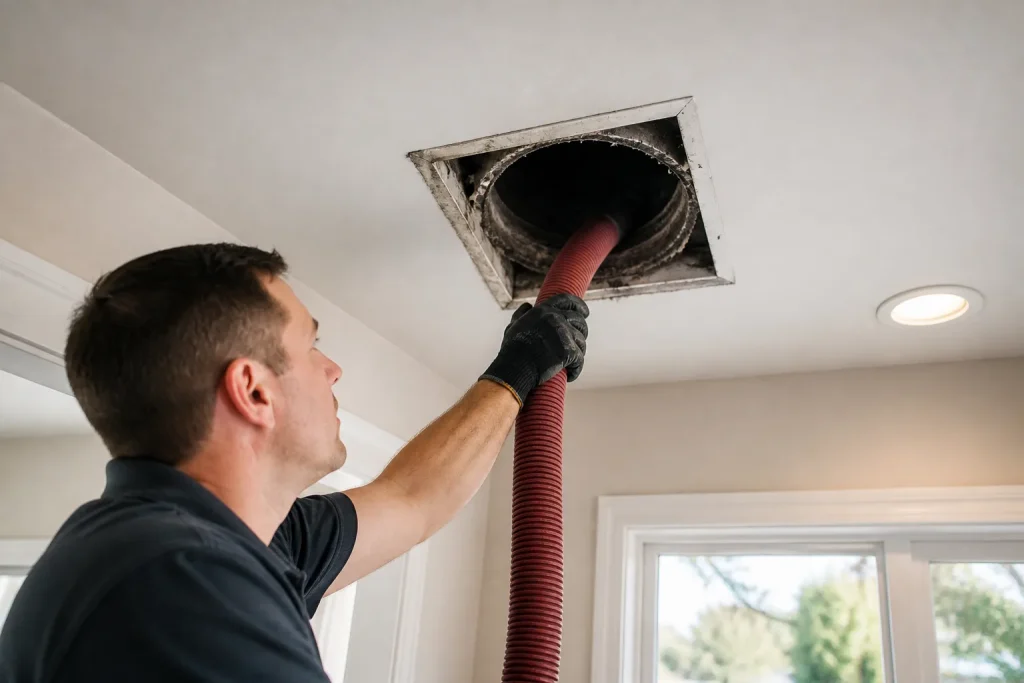
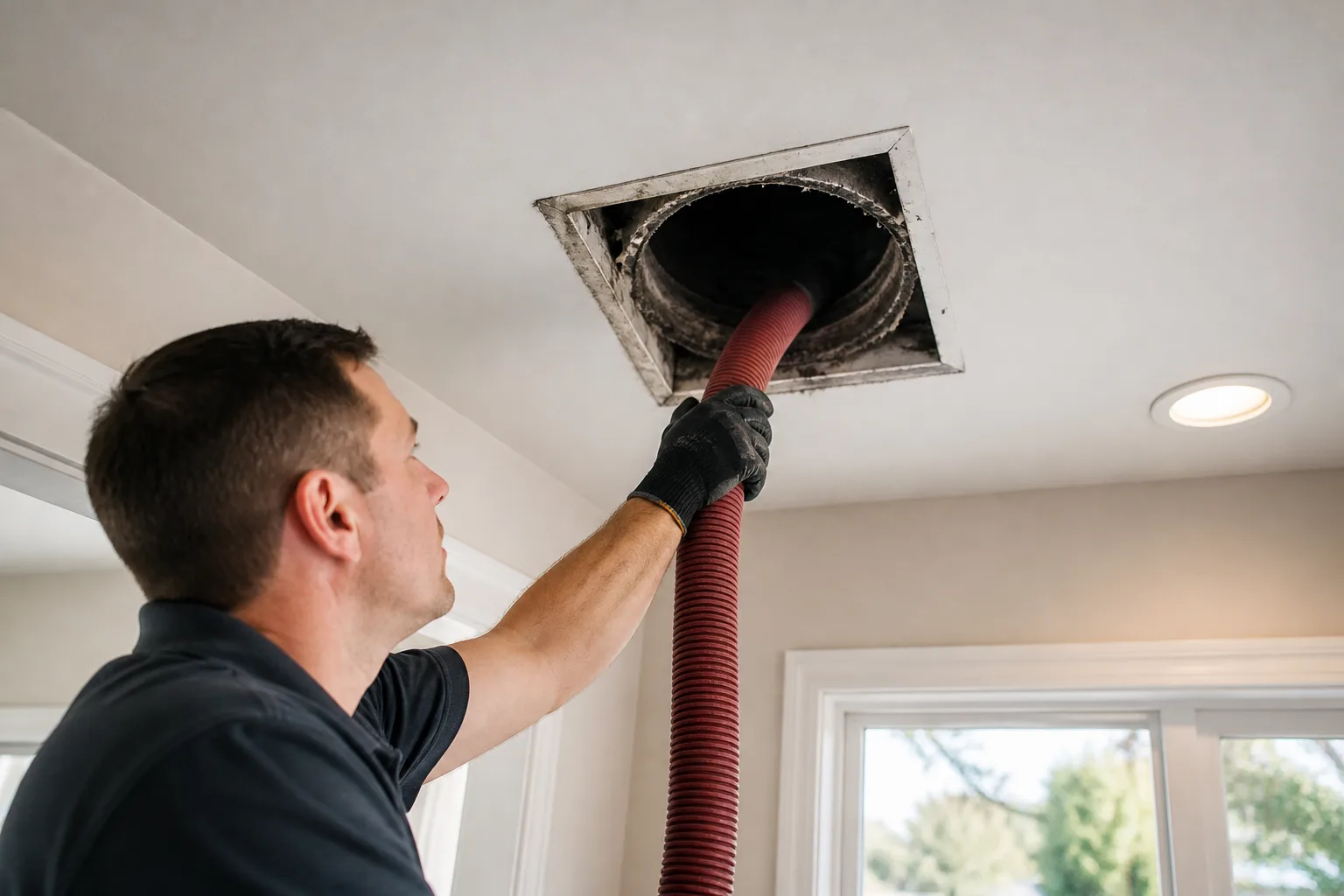
Emergency Air Duct Cleaning Near Me: What Tacoma Homeowners Should Do First
If you’ve had a house fire and you’re Googling “emergency duct cleaning” before calling your insurance adjuster, stop. You may be about to erase the evidence your claim depends on. The same goes for a sewage backup that soaked into a crawl space. Order matters more than speed here. In Tacoma, where a lot of older homes have original ductwork tucked into tight crawl spaces, skipping the first steps can cost you a claim and make the cleanup harder. If you’d rather have someone walk you through it, call (877) 792-6386.
Key Takeaways
- Document everything before a single piece of ductwork gets touched.
- Shut the HVAC system down to stop spreading contamination.
- Only four situations are true duct emergencies. Most others can wait a day.
- Post-emergency cleaning is a bigger job than routine cleaning, and it’s priced differently.
What Actually Counts as an Emergency Duct Situation in Tacoma?
A real duct emergency is any condition where contaminated air is actively moving through your home through the HVAC system. That’s the line. If the system is off and the source is contained, you have an urgent problem, not an emergency. In Tacoma homes we see four situations that cross into emergency territory.
- Post-fire smoke and soot. Smoke residue settles into duct linings and gets pushed back through every room the moment the system runs. Soot is acidic and keeps damaging metal and finishes while it sits.
- Sewage backup infiltration. When a backup reaches a crawl space or a duct run, the air handler becomes a distribution system for bacteria and odor. This one carries a real health concern, not just a smell.
- Vermin infestation. Rodents or birds nesting in ductwork leave droppings and debris that get airborne. This is a contamination-control job, not a vacuuming job.
- Mold growth inside the system. Tacoma’s damp fall and winter give moisture a long window to work inside duct insulation. Visible growth near a register or a musty smell that gets stronger when the heat runs is a sign the interior needs inspection.
Everything else, like a dusty register, a mild odor, or a system that hasn’t been cleaned in years, is urgent but not an emergency. You can schedule those and still breathe fine in the meantime.
What Should You Document Before Any Cleaning Starts?
Document first, clean second. Your insurance claim depends on proving what happened and how far it spread, and once a crew starts pulling debris, that proof is gone. Before anyone touches a duct, work through this list:
- Photograph every room, every register, and the air handler from several angles. Get close-ups of soot lines, water staining, or droppings.
- Write down the date and time you noticed the problem and what you did about it.
- Save any receipts related to the event, including a fire report or a plumber’s invoice for a backup.
- Keep a sample of damaged material if your adjuster asks for one. Don’t throw anything out yet.
- Get your claim number and your adjuster’s direct contact before you book remediation.
This is the step Tacoma homeowners skip most often, and it’s the one that’s hardest to undo. A good contractor will ask to see your documentation before starting, not after. If a company wants to begin work the same hour without asking about your claim, that’s a reason to slow down.
How Do You Shut Down Your HVAC System Safely?
Turning the system off stops contaminated air from circulating through your Tacoma home while you wait for a technician. Do it at the thermostat first, then at the equipment:
- Set the thermostat to OFF, not just a low temperature. You want the fan to stop.
- Find the air handler and switch off its dedicated breaker at the panel. Label it so nobody flips it back on.
- If you have a gas furnace, leave the gas valve alone. Don’t touch gas lines. Shut off the electrical supply only.
- Close registers in affected rooms if you can reach them safely. Don’t remove grilles or reach into ductwork.
- Open windows for ventilation if outdoor air quality allows.
Here’s the safety caveat that matters: don’t open the air handler cabinet, don’t pull panels off the furnace, and don’t reach into ducts to inspect. Electrical components and gas connections inside that equipment are not a DIY area. A trained technician handles the interior inspection. Your job is to stop the airflow and leave the equipment closed.
What Should You Tell a Contractor When You Call?
The more specific you are on the phone, the better equipped the crew arrives. Tell them these five things in this order:
- The cause. Fire, sewage, vermin, or mold. Each one calls for a different scope and different protective equipment.
- The timeline. When it happened and whether the system has run since.
- The home. Approximate square footage, number of registers, and whether the ducts are in a crawl space or attic.
- The insurance status. Whether a claim is open and whether the adjuster has seen the space.
- Any visible damage. Water staining, sagging flex duct, or crushed runs you can see from outside the system.
Post-emergency work is contamination control, and it needs gear built for it. We run Rotobrush and Nikro systems, and for the heavier situations, Abatement Technologies equipment, which is the same class of machine commercial remediation contractors use. That matters for a fire or sewage job. A standard cleaning setup won’t cut it. When you call, ask what equipment the crew is bringing. A contractor who can answer that question clearly knows their trade.
Why Post-Emergency Cleaning Is a Different Job Than Routine Cleaning
Routine cleaning removes accumulated dust and debris. Post-emergency cleaning removes contaminants and then verifies they’re gone. That’s a longer, more technical scope, and it changes both cost and timeline.
The reason is what’s left behind. Smoke residue bonds to duct linings. Sewage leaves biological contamination that has to be treated, not just vacuumed. Vermin leave waste that needs containment before removal. So a post-emergency job typically includes:
- Containment setup to keep contaminants from spreading during the work
- HEPA filtration and negative pressure where the situation calls for it
- Cleaning of the air handler and coils, not just the duct runs
- Sanitizing the system after cleaning. We use Guardsman products for that step.
- Inspection of duct condition, because fires and water often damage the ductwork itself
That last point is where a lot of jobs go sideways. Emergency events damage ducts as often as they contaminate them. Crushed flex runs, separated joints, and waterlogged insulation all reduce airflow and pull in unfiltered air. We repair and seal what we find, so the system is actually sound when the cleaning is done, not just empty. Expect an emergency job to run longer than a routine cleaning and to be priced on the written estimate for the scope, not a flat rate.
When to Call a Pro
If you’ve got fire residue, sewage, or vermin in the system, call before you clean. Call (877) 792-6386. We answer 24/7. Fast dispatch from 7am to 7pm, Sunday through Friday. Estimates are free, and the price is set per job by the written estimate.
Related services in Tacoma: air duct cleaning for the scheduled, non-emergency jobs, HVAC cleaning when the air handler and coils are involved, and dryer vent cleaning if lint buildup is part of the picture. For the full air-quality picture, see Air Duct Cleaning Tacoma Pros.
The Bottom Line
In a true duct emergency, the order is documentation, shutdown, then cleaning. Get your photos and your claim number sorted before anyone touches the system. Shut the HVAC off at the thermostat and the breaker and leave the equipment closed. Tell the contractor the cause, the timeline, and the home details so the right equipment shows up. Post-emergency work is a bigger scope than routine cleaning, and it’s priced accordingly. Our technicians have up to 11 years of experience, and we work with the same professional-grade equipment commercial contractors rely on. If you’re in Tacoma and need help, call (877) 792-6386 for a free estimate.
Frequently Asked Questions
It’s an emergency if contaminated air is actively circulating through the system from a fire, sewage backup, vermin infestation, or confirmed mold growth. If the system is off and the source is contained, it’s urgent, not an emergency, and you can schedule it. Call (877) 792-6386 for a free estimate and we’ll help you sort which one you’re dealing with.
No. Running the system after a fire, sewage, or vermin event pushes contaminants through every room and deeper into the duct lining. Shut it off at the thermostat and the breaker and leave it off until a technician inspects it. Call (877) 792-6386 to get it assessed.
Many policies cover post-emergency cleaning when it’s tied to a covered event like a fire or a water loss, but it depends on your policy and documentation. Post-emergency cleaning is priced per job by a written estimate because the scope varies so much. We can work with your insurer and give you a free estimate. Call (877) 792-6386.
We clean the full system: duct runs, registers, and the air handler and coils. After an emergency event, we also check duct condition and repair and seal any damage we find, then sanitize. That’s the difference between a clean system and a sound one. Call (877) 792-6386 for a free estimate.
Written by the team at Air Duct Cleaning Tacoma Pros.
Need Air Duct Cleaning Help?
Call Air Duct Cleaning Tacoma Pros - the local pro we connect you with is licensed and insured, here with fast help in Tacoma.
(877) 792-6386