
Aprilaire Air Duct Cleaning in Tacoma: A Homeowner’s Guide
If you installed an Aprilaire system expecting cleaner ducts and you’re still getting dusty registers, the filter isn’t failing. Your duct network upstream of the unit probably is. An Aprilaire filter captures what reaches it, and it does that well. It can’t do anything about the debris that settled into your ducts before the system went in, or the dust that keeps shedding off dirty duct walls and bypassing the filter entirely. That’s the piece most Tacoma homeowners miss, and it’s why a house with good filtration can still have dirty ducts. If you’d rather have someone look instead of guessing, call (877) 792-6386. We answer 24/7. Fast dispatch from 7am to 7pm, Sunday through Friday.
How does an Aprilaire filter change what ends up in your ducts?
An Aprilaire media filter sits at the air handler and traps particles before they cycle back into your rooms. The MERV-11 and MERV-13 media most Tacoma homes run capture a large share of the fine dust, pollen and pet dander that would otherwise recirculate. That’s the point of the system, and it works.
What it doesn’t do is reach backward. Here’s the split that matters:
- At the unit: the Aprilaire filter handles airborne particles passing through the return. Higher MERV means more captured per pass.
- Upstream in the ducts: settled dust, construction debris, drywall dust from a remodel, and the film that builds on duct walls stay put. Airflow moves some of it, but a filter can’t collect what never reaches it.
- The gap in between: any leak, loose joint or unsealed boot lets unfiltered air slip in downstream of the filter. That air never gets cleaned.
So a high-MERV Aprilaire filter reduces the rate at which new contamination builds in the ducts. It doesn’t remove what’s already there. In our experience, that’s the single most common misunderstanding we run into on Tacoma jobs: homeowners assume the filter did the cleaning. It did the preventing.
Do Aprilaire homes really need duct cleaning less often?
Yes, sometimes legitimately. The old “every three to five years” rule of thumb was written for homes with basic fiberglass filters and no high-efficiency media. An Aprilaire-equipped home in Tacoma can often stretch longer between cleanings, because the filter is catching more before it settles. But that’s a general pattern, not a guarantee for your house.
Several conditions override the longer interval, and they show up in Tacoma homes often enough that we check for them every time:
- Remodel or renovation dust. Drywall, sawdust and insulation fibers overwhelm a filter fast. If you’ve had work done, the ducts need attention regardless of filter quality.
- Water intrusion or musty smells. Any moisture in the system is a stop-and-look situation, not a wait-and-see.
- Visible debris at the registers. If you can see dust plumes or debris when the system kicks on, the filter isn’t keeping up with the source.
- Pest activity. Rodents and insects in ductwork leave contamination a filter won’t touch.
- Filter neglect. An Aprilaire media filter run well past change-out stops filtering and starts restricting airflow, which changes everything downstream.
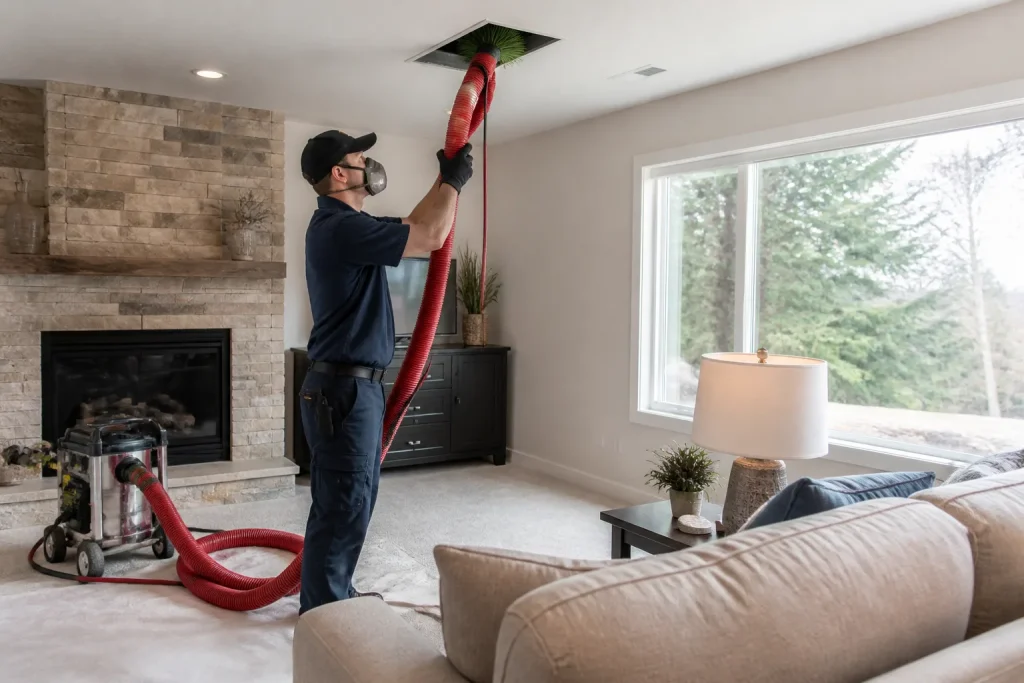
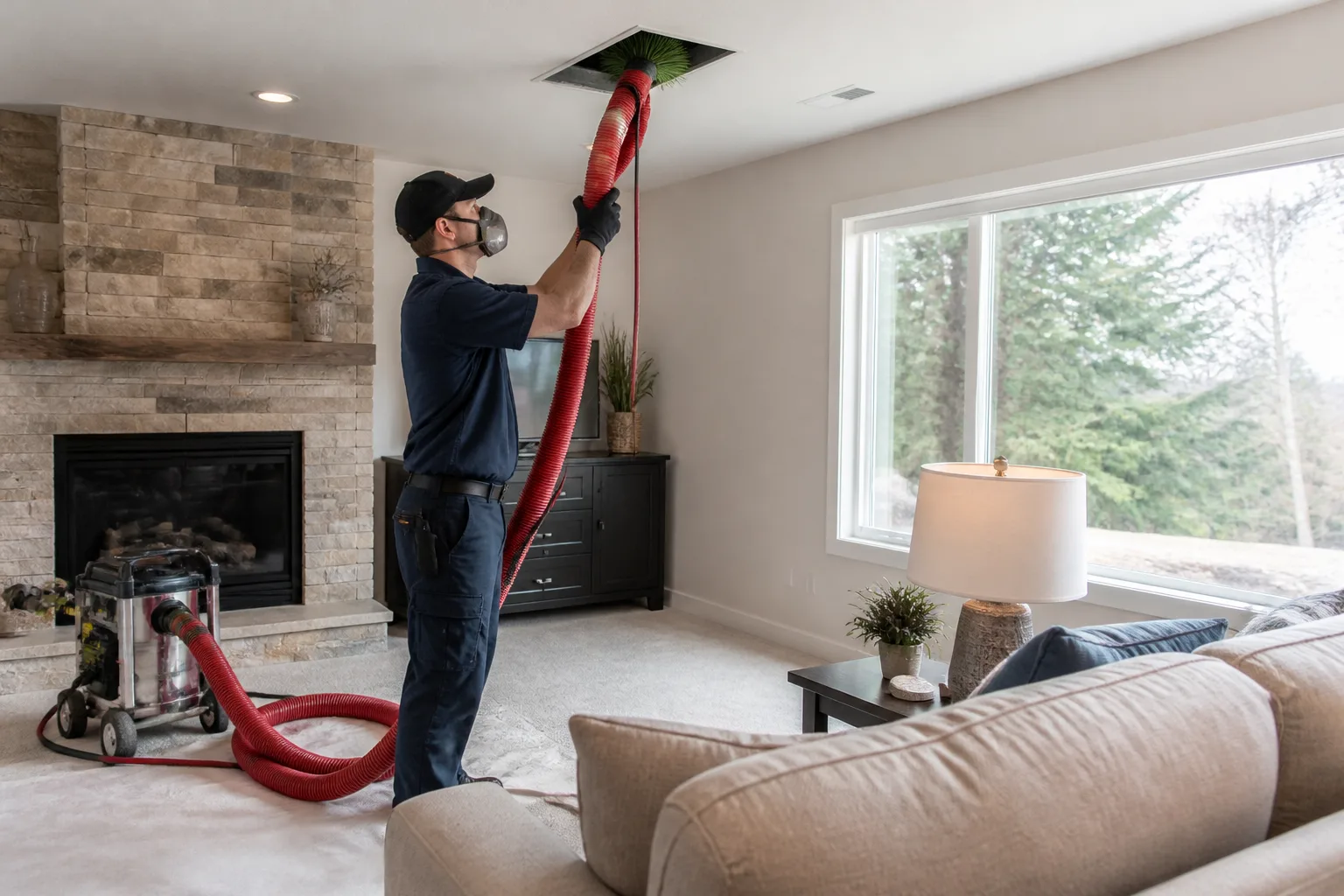
If any of those are true, the interval shortens no matter what filter you run. That’s the honest answer, and it’s why we inspect before we recommend a cleaning schedule. On the technical side, professional-grade equipment like Rotobrush and Nikro source-removal systems let us pull contamination out rather than just blow it around, which matters more in a filtered system where you don’t want to reintroduce what the filter has been catching. For a fuller look at what a proper cleaning involves, see our air duct cleaning page.
What should a technician check in an Aprilaire-integrated system?
An Aprilaire setup isn’t a standard forced-air system, and an inspection that treats it like one misses the parts that matter most. These are the checkpoints that differ:
- The filter cabinet and gasket seal. A warped or loose Aprilaire cabinet door lets air bypass the filter entirely. If unfiltered air is sneaking past, your MERV rating is theoretical.
- Filter fit and part number. The wrong size media leaves gaps. We confirm the correct Aprilaire filter is installed and seated properly.
- The bypass humidifier ductwork. If you have an Aprilaire bypass humidifier, its duct taps into the system. Those connections are a common leak and moisture point, and they need a close look.
- Return-side duct condition upstream of the filter. This is the dirty side. Loose joints and gaps here pull in attic or crawlspace air before filtration.
- The evaporator coil and blower. A clogged coil or dirty blower wheel chokes airflow and makes even a good filter look ineffective. Cleaning the coil is part of HVAC cleaning, and we handle it in the same visit when it needs doing.
The goal is to find the actual source of the dust, not just clean around it. When we find failed seals or disconnected runs, we repair and seal them, so the next round of contamination has a harder time starting. We repair what we find, and that’s the part that separates a real fix from a surface cleaning. If you’re also thinking about the other vent in the house, our dryer vent cleaning work follows the same source-removal approach.
How do you time filter changes around a duct cleaning?
Don’t install a fresh Aprilaire filter and then have the ducts cleaned the same week. Cleaning dislodges fine dust, and some of it settles back into the system before it’s fully evacuated. Put a new filter in after the cleaning, once the system has been run and checked. That way your new media starts clean and isn’t loaded with the residue of the job.
A practical sequence for a typical Tacoma home:
- Inspect the ducts, filter cabinet, coil and any humidifier connections.
- Clean the system with professional-grade equipment, including source removal.
- Repair and seal any leaks or failed joints found along the way.
- Run the system briefly, then install the new Aprilaire filter.
- Note the change-out date and set a reminder based on your filter’s rated interval.
The timing coordination is the whole point. A clean duct system and a fresh filter reinforce each other; a fresh filter in a dirty system just gets dirty faster. One call covers your entire air system, from the return grille to the air handler, and we line up the filter change so it all lands in the right order. That coordination is the difference between efficiency and wasted media.
What does Tacoma’s humidity mean for an Aprilaire humidifier and your ducts?
Tacoma runs humid. Our spring and fall swings push indoor moisture up, and that has a direct effect on any Aprilaire bypass humidifier plumbed into the system. The humidifier line and the duct connections around it are the first places we look for trouble.
What matters:
- The bypass duct and drain. A clogged or misrouted drain can leave standing moisture in the humidifier housing. That’s where biological growth starts.
- Duct insulation and joints. Cool duct surfaces in a humid Tacoma home can sweat. Wet insulation is a growth medium, and it stays wet long after the season turns.
- Filter media in a damp system. A wet Aprilaire filter is worse than no filter. It restricts airflow and becomes a problem in its own right.
- Signs of trouble. Musty odors when the fan runs, water stains near the humidifier, or a humidistat reading that won’t settle are all worth a look.
Where moisture is the concern, air sanitizing after cleaning addresses what’s left behind. That’s part of the same visit, and we use Guardsman-grade protection as part of the post-cleaning process. If you want to understand why a damp system needs more than a shop-vac pass, our main page at Air Duct Cleaning Tacoma Pros lays out the full scope of what we handle.
When should you call a pro instead of handling it yourself?
Most duct cleaning isn’t a homeowner project, and it’s worth saying plainly. Consumer-grade vacuums and rental equipment agitate contamination without containing or removing it, which can make indoor air worse before it gets better. Tools like Rotobrush, Nikro and Abatement Technologies exist because source removal requires real suction, containment and HEPA-grade capture. Those are the same platforms commercial and industrial contractors use, and they’re built for this work. A good rule: if you can see dust blowing out of a register, smell something musty, or you’ve just finished a remodel, it’s time for a professional inspection. Our technicians have up to 11 years of experience evaluating systems like yours. Call (877) 792-6386 for a free estimate. We answer 24/7. Fast dispatch from 7am to 7pm, Sunday through Friday.
Related services in Tacoma: If you’re looking at your whole air system, we also handle HVAC cleaning and dryer vent work in the same visit.
The Bottom Line
Your Aprilaire filter is doing its job. The question is whether the ducts upstream of it are giving it a fair chance. A high-MERV filter slows new contamination, but it can’t remove what’s already settled in the system, and it can’t clean a leaky return pulling unfiltered air in behind it. In a humid Tacoma home, the humidifier connections and duct insulation deserve a look too. The smart play is an inspection that understands Aprilaire systems, a cleaning timed before the next filter change, and repair of any leaks found in the process. If you’re in Tacoma and need help, Air Duct Cleaning Tacoma Pros offers free estimates. Call (877) 792-6386. We answer 24/7. Fast dispatch from 7am to 7pm, Sunday through Friday.
Frequently Asked Questions
Often less frequently than three to five years, but that’s a starting point, not a rule. High-efficiency filters reduce how fast new contamination builds, so many Aprilaire homes can stretch longer between cleanings. Remodels, moisture issues, pest activity or visible register debris all override that and call for an inspection sooner. Call (877) 792-6386 for an exact recommendation, estimates are free.
No. A MERV-13 filter captures more particles per pass, but it only cleans air that reaches it. Dust settled on duct walls, construction debris and air leaking in through unsealed joints downstream of the filter all stay in the system. The filter prevents future buildup; it doesn’t remove existing contamination.
The most likely cause is a filter bypass or a duct leak upstream of the filter. A loose cabinet door, wrong-size media, or an unsealed return joint lets unfiltered air into the system past the filter. A proper inspection confirms whether the filter is actually doing its job. Call (877) 792-6386 to book one.
Not when it’s done right, and that’s why we sequence the work. We inspect the humidifier lines and connections before cleaning, protect them during the job, and install the new filter after the system is cleaned and checked. Done in that order, cleaning protects your equipment rather than stressing it.
Written by the team at Air Duct Cleaning Tacoma Pros.
Need Air Duct Cleaning Help?
Call Air Duct Cleaning Tacoma Pros - the local pro we connect you with is licensed and insured, here with fast help in Tacoma.
(877) 792-6386